
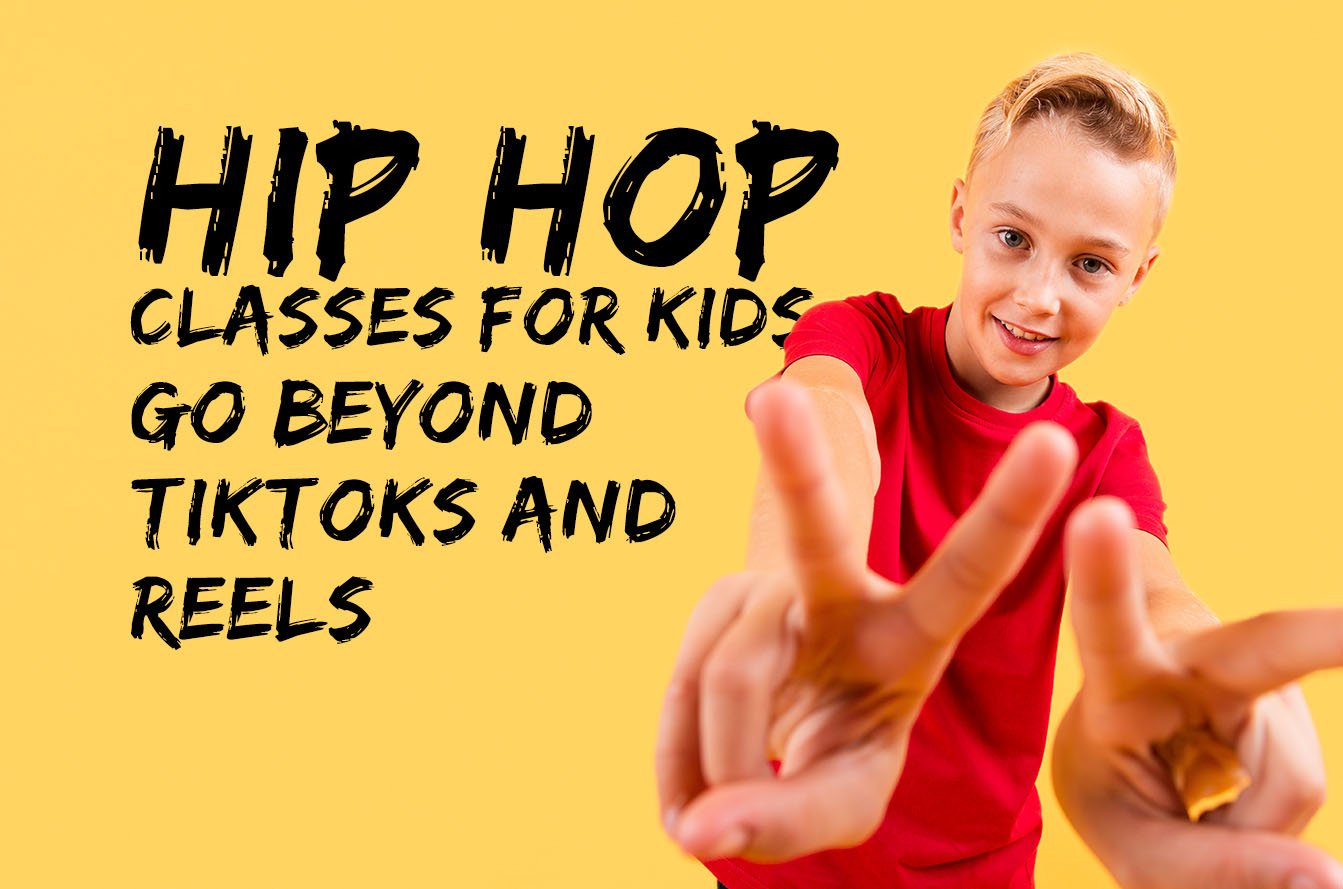
Hip Hop Classes for Kids Go Beyond TikToks and Reels
Maybe a TV show started it all. Or maybe when Bruno or Taylor comes on, your child takes over the living room. Either way, you’re researching Hip Hop classes for kids, and now you have questions.
What actually happens in class? Does Hip Hop involve Breakdancing? Are you worried about potential injuries?
Fair questions. A video shows you the finished dance, usually after plenty of practice. A dance class lets your child experience the work behind it, with a teacher there to explain, demonstrate, and help them through the parts they haven’t figured out yet.
As a Hip Hop dance teacher, I’ll walk you through what your child’s first year in class can look like.
Hip Hop’s history: From the streets to the studio
Hip Hop grew out of Black and Latino communities in the Bronx during the 1970s. Its four commonly recognized elements are DJing, emceeing or rapping, graffiti, and Breaking. It was a culture built through music, expression, and community long before it became a class on a studio schedule.
Breaking, often called breakdancing, includes upright steps, floorwork, freezes, and power moves. Those spectacular spins are one part of it. A class labelled Hip Hop, however, doesn’t automatically teach Breaking or acrobatics. Ask the studio what its particular class includes.
As Hip Hop reached wider audiences through performances, television, and music videos, studio classes became another way to access the movement. What gets taught varies from teacher to teacher, class to class, studio to studio, making your teacher’s knowledge of foundations and history just as important as their ability to choreograph cool moves.
Like any physical activity, Hip Hop carries some risk of injury. A teacher can help children build the coordination and strength needed for new movements, introducing challenges gradually as their skills develop. Ask how the class approaches floorwork, what safety guidance students receive, and how movements are adapted for beginners.
Life lessons in Hip Hop classes for kids
Hip Hop classes for kids can introduce grooves, rhythm, weight shifts, and isolations. Something that looks effortless on screen can take a surprising amount of coordination. Watching a video can show your child where to put their feet. A teacher can also notice how they balance and shift their weight, then help them adjust so the steps feel more comfortable and controlled.
Classes generally begin with a warm-up before moving into exercises or choreography. Depending on the teacher and their lesson plan, they may incorporate freestyle, games, or motivational talks to get them focused on their dances. Freestyle gives children opportunities to express themselves and make their own movement choices, instead of only following a set sequence the whole time.
There are practical lessons in that process. Repeating a difficult section takes patience. Dancing with a group teaches them how their preparation affects others. Missing a step means recovering with grace.
Does my child need to be outgoing?
No, your child doesn’t need to be the first person volunteering for the spotlight.
Some children happily dance in front of anyone. Others perform entire concerts at home and go quiet the moment someone unfamiliar walks into the room. Their interest in dancing can be real in both situations.
They may need a few classes to get comfortable with their teacher and classmates. Tell the teacher about any nerves beforehand, especially around freestyle or performing alone. Ask how those activities are introduced.
The goal doesn’t have to be turning your reserved child into an outgoing performer. Enjoying the class and feeling comfortable enough to participate are worthwhile starting points.
What progress can look like
At first, your child might need to watch the teacher through every count. A few months later, they may remember the sequence and start paying attention to how they perform it.
By the end of the first year, your child may be dancing on beat, remembering the choreography on their own, and dancing with more comfort and confidence. They might make a friend or two that they look forward to seeing each week. Being excited to come to class counts, too.
These aren’t boxes every child needs to tick within a year. Progress depends on their starting point, attendance, and what the class works on.
Getting to know another dance parent can make the experience more social for you, too. For questions about your child’s development, go directly to their teacher. Ask what they’re working towards and where your child has improved.
What to wear before they hit the floor
Your child needs dance attire they can move comfortably in. Check the dress code before shopping, since requirements can differ by age and program.
Caulfield’s Hip Hop guidelines specify athletic clothing in solid neutral colours, without large logos or graphics. Jeans, belts, jewellery, zippers, rivets, and non-stretch fabrics aren’t permitted. The Hip Hop footwear guidelines call for clean, all-white indoor running shoes with white soles.
Check Caulfield’s What to Wear page and confirm which requirements apply to your child’s class.
Their next move starts at Caulfield
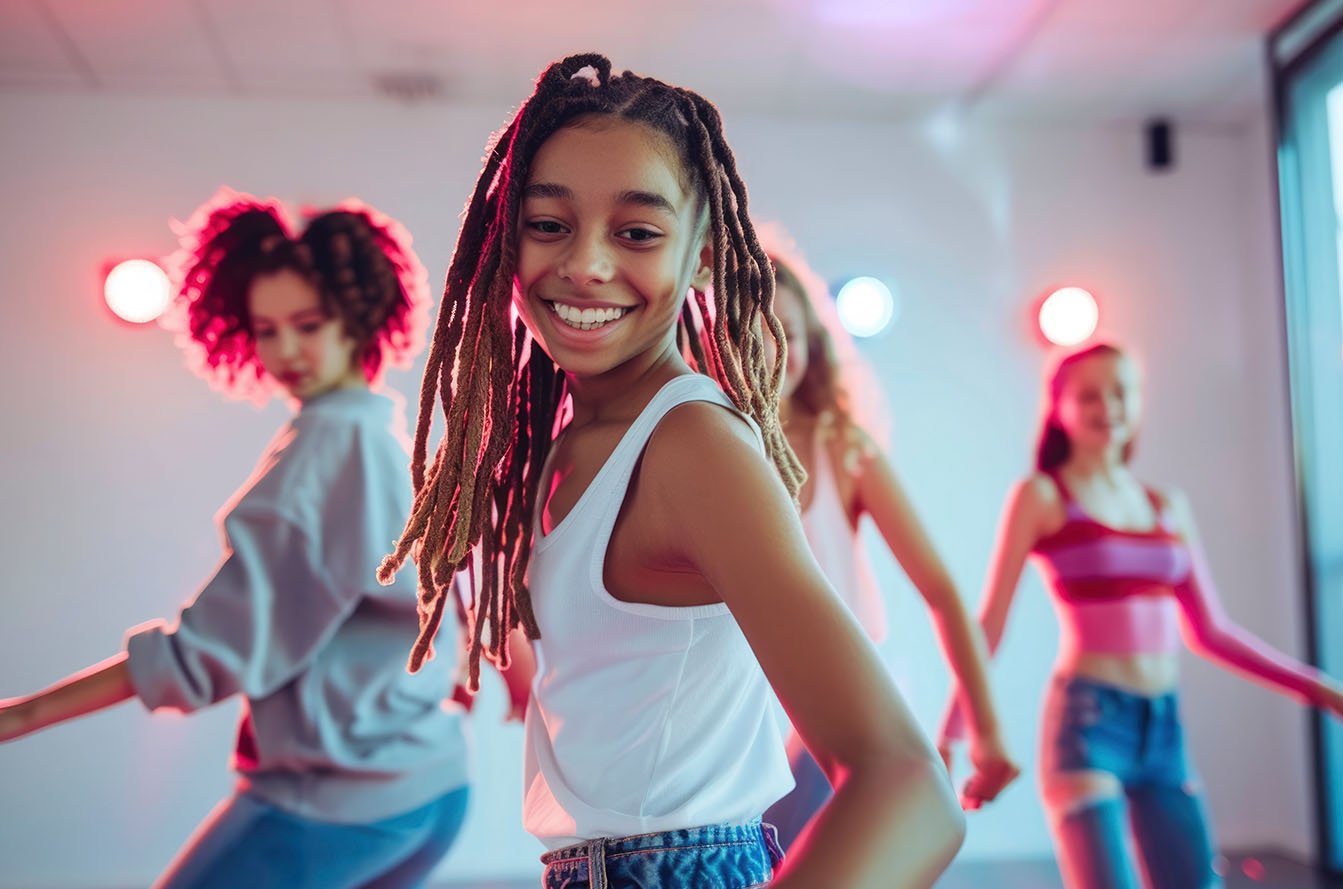
At Caulfield, Hip Hop is a staple dance style offered through our performance and recreational classes, where dancers develop their technique, rehearse choreography, and gain confidence performing together. Our team can help you understand placement, training requirements, and the commitment involved.
Visit our program information page or contact admin@caulfield.bc.ca to ask about Hip Hop classes for kids.
Tell us what sparked your child’s interest, and we’ll help you find a class where they can explore it.